How Long Does Chicken, Goat, Lamb & Beef Stay Fresh?
A clear refrigerator and freezer timeline for raw chicken, goat, lamb, beef, ground meat, curry cuts, and cooked leftovers—plus safe thawing tips.
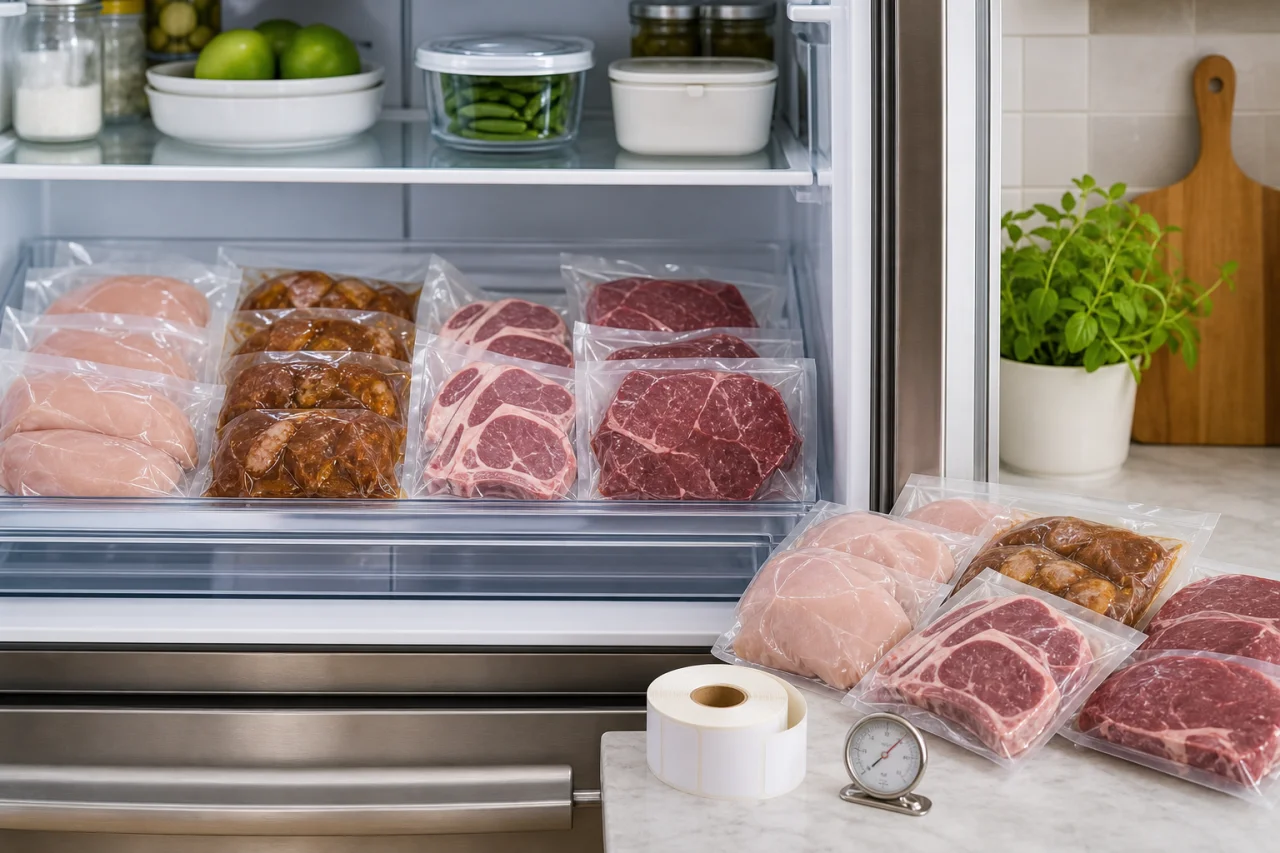
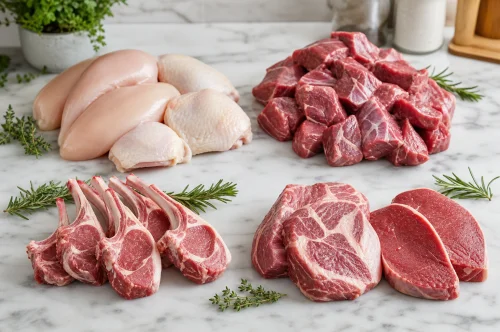
Fresh meat does not have one universal refrigerator life. A whole steak keeps longer than ground meat, cooked leftovers have a different timeline, and an unopened package is only as safe as the temperature it experienced before reaching your refrigerator.
The timelines below follow current USDA guidance for a home refrigerator kept at 40°F or below. When the package has an earlier use-by date, follow that date. If delivery arrives warm, leaking, or with damaged packaging, do not rely on the calendar—contact the seller and discard unsafe food.
Quick refrigerator timeline
| Food | Refrigerator at 40°F or below | Freezer quality guide at 0°F |
|---|---|---|
| Raw whole chicken | 1–2 days | Up to 1 year for best quality |
| Raw chicken pieces | 1–2 days | Up to 9 months for best quality |
| Ground meat or poultry | 1–2 days | About 3–4 months for best quality |
| Goat curry/stew pieces | 1–2 days | Use the package guidance; freeze promptly |
| Beef or lamb steaks, chops, and roasts | 3–5 days | About 4–12 months for beef; 6–9 months for lamb, for best quality |
| Raw stew meat | 1–2 days | About 3–4 months for best quality |
| Cooked meat or poultry leftovers | 3–4 days | Usually 2–6 months for best quality, depending on the dish |
Freezer times describe quality, not a sudden safety deadline. Food kept continuously frozen at 0°F remains safe much longer, but flavor and texture gradually decline.
How long does raw chicken stay fresh?
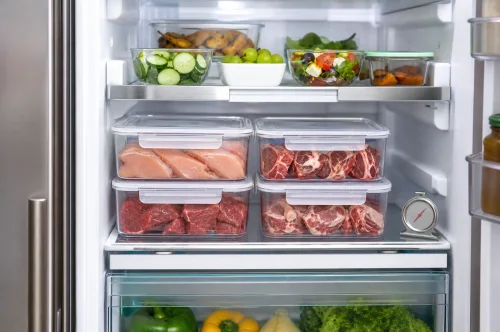
Whole raw chicken and chicken pieces should be cooked or frozen within one to two days. That includes breast, thighs, drumsticks, wings, ground chicken, and curry-cut pieces. Keep the package on the refrigerator’s lowest shelf in a rimmed tray or leak-proof container.
For best frozen quality, USDA lists up to one year for a whole chicken and nine months for pieces. Ground chicken is best within about three to four months.
How long does goat meat stay fresh?
Storage depends on the cut. Treat ground goat, small curry pieces, and stew meat conservatively: cook or freeze them within one to two days. Large intact chops or roasts may follow the broader three-to-five-day guidance used for intact red-meat cuts, but the seller’s use-by date and handling instructions should come first.
Goat is often sold as mixed bone-in curry pieces, which have many cut surfaces. Freeze those portions promptly if they are not part of the next day or two of meals. For frozen quality, follow the package guidance because cut size, packaging, and fat level differ widely.
How long does lamb stay fresh?
Raw lamb chops, steaks, and roasts can generally stay refrigerated for three to five days. Ground lamb and stew meat should be used within one to two days. Cooked lamb leftovers keep for three to four days.
For best quality, USDA guidance lists six to nine months in the freezer for lamb roasts, steaks, and chops, and three to four months for ground lamb. Proper wrapping matters: remove excess air and protect the original package with freezer wrap when storing for more than a short period.
How long does beef stay fresh?
Beef steaks and roasts generally keep for three to five days in a cold refrigerator. Ground beef, stew meat, and small cut pieces have more surface area and should be cooked or frozen within one to two days.
For best frozen quality, ground beef is commonly listed at three to four months, while steaks and roasts can retain quality for roughly four to twelve months. Label every package with the cut and freeze date so the oldest food is used first.
What changes after thawing?
Meat thawed safely in the refrigerator does not need to be cooked the instant it becomes soft. Ground meat, poultry, fish, and stew meat generally have another one to two refrigerated days. Beef and lamb steaks, chops, and roasts generally have three to five days.
Food thawed in cold water or the microwave should be cooked immediately because parts of it may have warmed. Never thaw meat on the counter.
Safe thawing methods
1. Refrigerator thawing
This is the safest and easiest method. Put the sealed package on a tray on the lowest shelf and allow enough time. A small pack may thaw overnight; a whole bird or large roast can take one or more days.
2. Cold-water thawing
Place meat in a leak-proof bag, submerge it in cold water, and change the water every 30 minutes. Cook immediately after thawing.
3. Microwave thawing
Use the defrost setting only when you can begin cooking right away. Rotate and separate pieces as they soften so edges do not start cooking while the center remains frozen.
How to freeze meat without losing quality
- Divide large purchases into meal-sized portions before freezing.
- Keep the meat cold while you work and avoid leaving it on the counter.
- Wrap tightly in freezer paper, heavy-duty foil, or freezer bags.
- Press excess air from bags to reduce freezer burn.
- Label the package with meat type, cut, weight, and freeze date.
- Freeze packages flat so they cool quickly and stack neatly.
- Use a first-in, first-out system.
Freezer burn is a quality problem: dry, pale patches can taste tough, but they do not automatically make continuously frozen food unsafe. Trim badly affected areas after thawing.
Use-by, sell-by, and freeze-by dates
A sell-by date helps a store manage inventory. A use-by or best-if-used-by date is generally about the manufacturer’s expected quality, except where a specific regulation applies. These labels do not replace cold storage and safe handling. When buying fresh meat, plan meals around the earliest package date and freeze extras promptly.
Do not rely on smell alone
Sour odors, sticky or slimy surfaces, unusual discoloration, leaking packages, and swollen vacuum packs are reasons to discard meat. However, harmful bacteria can be present without obvious smell or color changes. If meat spent too long above 40°F, discard it even when it looks normal.
The two-hour rule
Perishable food should not remain at room temperature for more than two hours—or more than one hour when the temperature is above 90°F. This includes groceries in a hot car and cooked food sitting on a buffet. Refrigeration slows bacterial growth; it does not undo time already spent warm.
When a meat delivery arrives
- Open the shipment promptly.
- Refrigerated meat should arrive at 40°F or below; frozen products should still be frozen or contain ice crystals.
- Check for tears, leaks, and broken seals.
- Move the food directly to the refrigerator or freezer.
- Photograph and report a warm or damaged order; do not taste it.
Cooked leftovers
Refrigerate cooked meat within two hours in shallow covered containers. Use most meat and poultry leftovers within three to four days, or freeze them. Reheat leftovers to 165°F. Large pots of curry or stew cool slowly, so divide them into smaller containers instead of putting one deep, hot pot in the refrigerator.
A simple labeling system
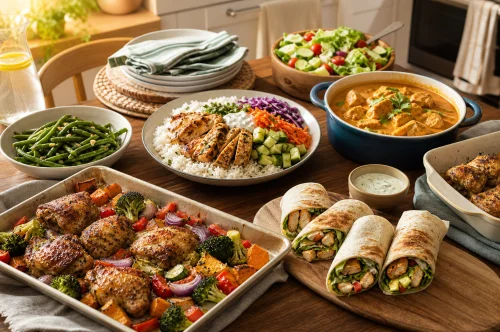
Write three items on every container: what it is, when it was cooked or frozen, and the number of portions. Keep a small “use first” bin at the front of the refrigerator. Once a week, turn those ingredients into soup, wraps, curry, or a freezer meal before buying more.
The safest habit is planning early: keep the refrigerator at 40°F or below, cook or freeze ground meat, poultry, fish, and stew pieces within one to two days, and use intact beef and lamb cuts within three to five days. When time or temperature is uncertain, throw the food out.
Storage references: USDA refrigeration guidance, USDA refrigerator timelines, and USDA lamb storage guidance.