How to Store Fresh Meat Safely at Home
A practical home guide to refrigerator placement, safe storage times, freezer wrapping, labeling, thawing, cross-contamination prevention, and cooking temperatures.
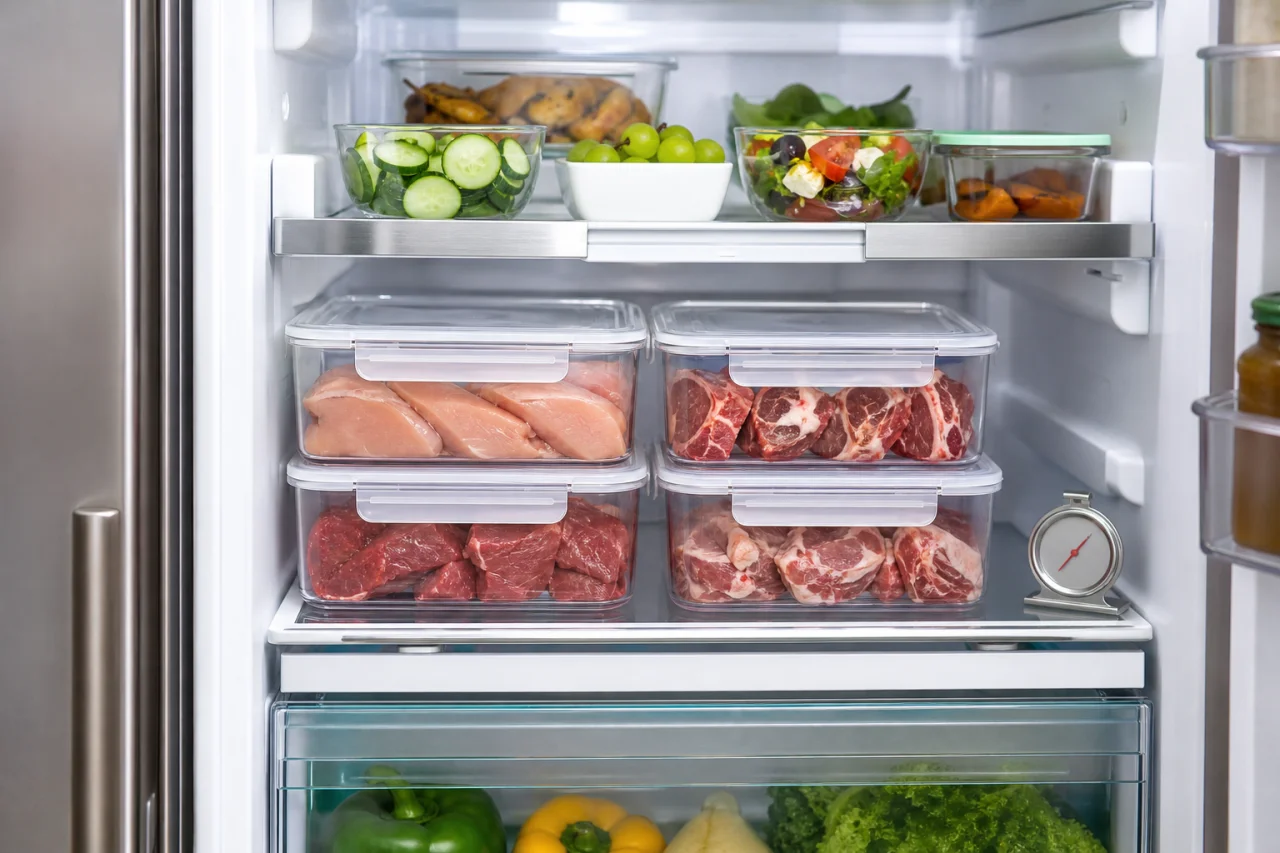
Fresh meat stays safe and tastes better when you control four things: temperature, time, containment, and cleanliness. A good routine starts the moment groceries or a delivery box reach your home.
Keep the refrigerator and freezer cold enough
Set the refrigerator to 40°F or below and the freezer to 0°F or below. Use an appliance thermometer to verify the temperature; the built-in dial may show a setting rather than the actual temperature.
Refrigerate or freeze perishable meat promptly. Do not leave it at room temperature for more than 2 hours, or more than 1 hour when the surrounding temperature is above 90°F.
Store raw meat on the lowest shelf
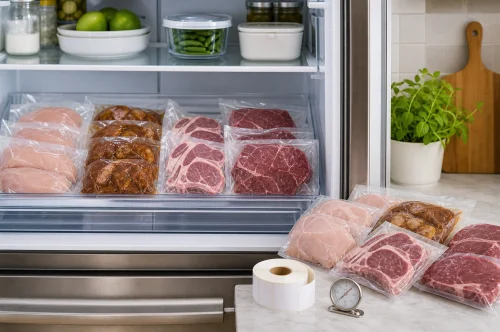
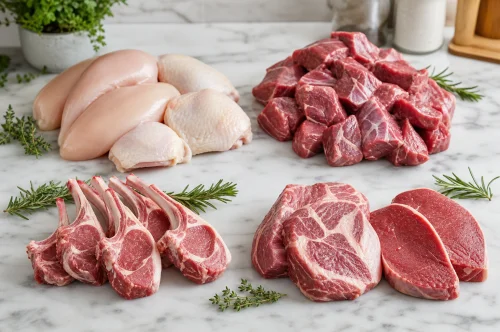
Keep chicken, goat, lamb, beef, and seafood in sealed, leak-proof containers or securely wrapped packages. Place them on the lowest refrigerator shelf, below produce, cooked meals, drinks, and other ready-to-eat foods. This reduces the chance that raw juices will drip onto food that will not be cooked.
Do not rely on a thin store tray to contain a leak. Put the entire package on a rimmed plate, tray, or washable container.
How long fresh meat stays refrigerated
| Food | Refrigerator at 40°F or below | Freezer quality guide at 0°F |
|---|---|---|
| Raw chicken, whole or pieces | 1 to 2 days | Whole: up to 1 year; pieces: up to 9 months |
| Ground meat or poultry | 1 to 2 days | About 3 to 4 months |
| Stew meat | 1 to 2 days | Use the package guidance for best quality |
| Fresh beef, lamb, or similar red-meat steaks, chops, and roasts | 3 to 5 days | Common quality ranges are 4 to 12 months depending on the cut |
| Fresh fish and shellfish | Use within 2 days | Varies by species and fat content |
| Cooked meat and poultry leftovers | 3 to 4 days | Usually best within 2 to 6 months, depending on the dish |
These are general federal guidelines. A package use-by date, manufacturer direction, unusual handling history, or refrigerator above 40°F can shorten the safe period. Freezing keeps food safe for a very long time; listed freezer periods mainly describe best quality.
Freeze meat before the refrigerator clock runs out
If you will not cook a package in time, freeze it early rather than waiting until the last day. Divide family packs into recipe-size portions so you thaw only what you need.
- Pat the outside of the package dry.
- Wrap tightly in freezer paper, heavy foil, or freezer-grade bags.
- Press out excess air without crushing the meat.
- Label the package with the cut, weight, and freeze date.
- Freeze packages flat when practical so they chill and thaw evenly.
Thin retail wrap allows air to reach the surface during long storage. Overwrapping helps prevent freezer burn, which harms texture and flavor even though it is not itself a food-safety hazard.
Use one of three safe thawing methods
Refrigerator thawing
This is the easiest method to manage. Put the package on a tray on the lowest shelf and allow enough time—small portions may need a full day. Meat thawed safely in the refrigerator can generally be refrozen, although quality may decline.
Cold-water thawing
Seal the meat in a leak-proof bag, submerge it in cold tap water, and change the water every 30 minutes. Cook immediately after thawing.
Microwave thawing
Use the defrost setting and cook immediately. Some areas may begin warming or cooking during the defrost cycle.
Never thaw meat on the counter or in hot water. The outside can enter a temperature range that supports rapid bacterial growth while the center remains frozen.
Prevent cross-contamination during preparation
- Wash hands with soap and water before and after handling raw meat.
- Keep raw meat separate from produce and cooked food.
- Use a dedicated cutting board or wash and sanitize the board before another use.
- Do not place cooked meat back on a plate that held it raw.
- Do not use raw marinade as a finished sauce unless it is brought to a safe boil.
- Clean refrigerator spills promptly.
Cook by temperature, not color
| Food | Safe minimum internal temperature |
|---|---|
| Chicken, turkey, and other poultry | 165°F |
| Ground beef, lamb, goat, and other ground meats | 160°F |
| Whole beef, lamb, and goat steaks, chops, and roasts | 145°F plus a 3-minute rest |
| Fish | 145°F, or until opaque and separating easily with a fork |
| Leftovers and casseroles | 165°F |
Place the thermometer in the thickest part without touching bone. Color and juices are not reliable safety tests.
When should meat be discarded?
Discard meat with a persistent sour, rancid, or otherwise abnormal odor; severe sliminess; leaking or swollen packaging; or a known unsafe temperature history. Do not taste food to decide whether it is safe. Harmful bacteria may be present without changing smell or appearance.
If perishable food has been above 40°F for more than 2 hours, federal guidance generally recommends discarding it. When you cannot confirm how long it was warm, choose safety.
A simple weekly storage routine
- Plan which meat will be cooked in the next 1 to 2 days.
- Freeze later-week portions on delivery day.
- Move the next frozen portion to the refrigerator the night before it is needed.
- Label leftovers and use them within 3 to 4 days.
- Check the refrigerator thermometer weekly.
Sources and further reading
- USDA FSIS: Refrigeration and Food Safety
- USDA FSIS: The Big Thaw
- USDA FSIS: Freezing and Food Safety
- FoodSafety.gov: Safe Minimum Internal Temperatures
People at higher risk of foodborne illness should follow current advice from their healthcare professional and federal food-safety agencies.