The Complete Guide to Buying Fresh Halal Meat Online in California
Learn how to evaluate halal claims, choose the right cuts, check cold-chain delivery, compare fresh and frozen meat, and inspect an online meat order when it arrives.
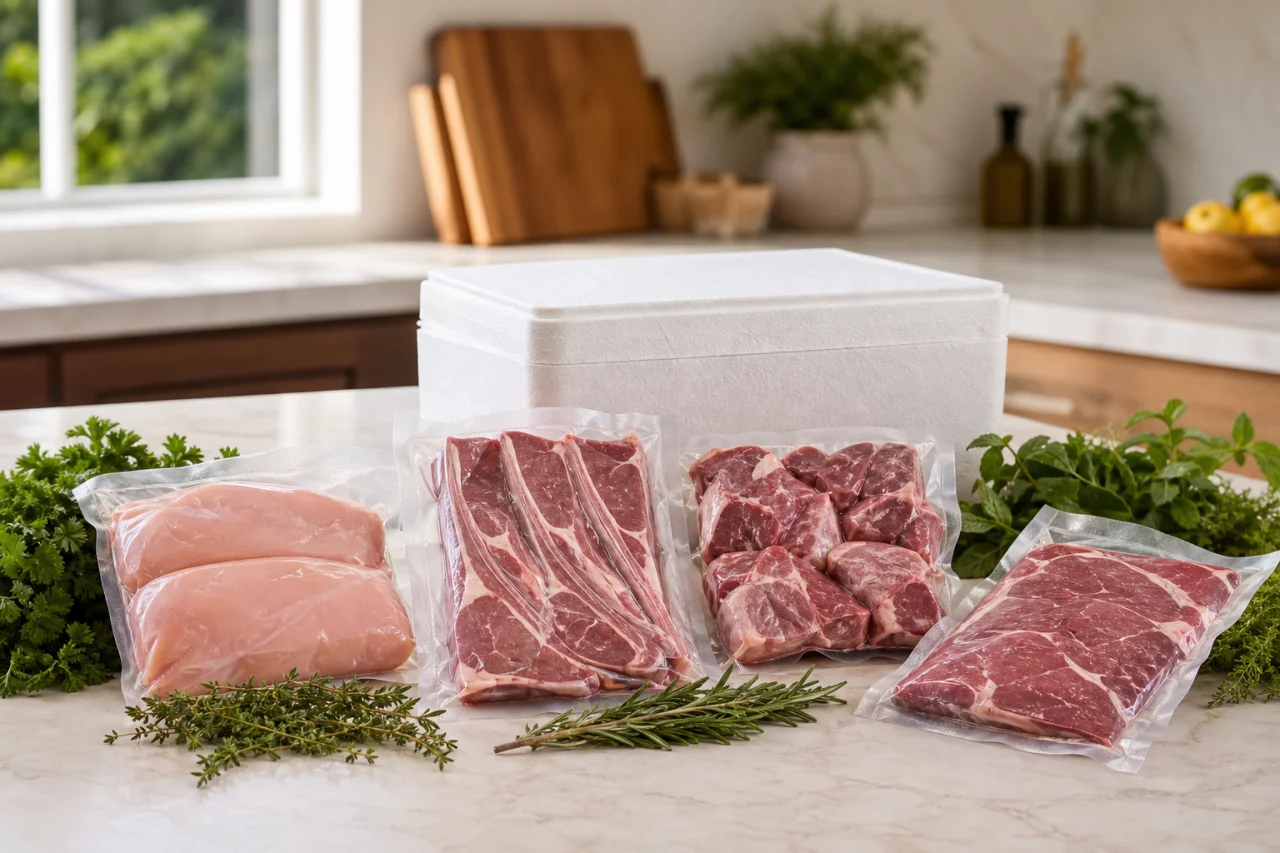
Ordering halal meat online can save a California family time, make specialty cuts easier to find, and simplify weekly meal planning. The best order, however, begins before checkout. A trustworthy purchase should combine a clear halal claim, accurate cut descriptions, careful cold-chain delivery, and practical customer support.
This guide explains what to check when buying chicken, goat, lamb, or beef online and what to do when the box reaches your door.
1. Start with a clear halal claim
Look for more than a halal symbol by itself. The seller should identify who supervises or certifies the halal process, explain whether the products are hand-cut or machine-processed when that distinction matters to its customers, and keep halal items protected from cross-contact during processing and packing.
For federally inspected meat and poultry, the USDA Food Safety and Inspection Service says products labeled “Halal” or “Zabiah Halal” must be handled according to Islamic law and under Islamic authority. A reliable store should therefore be able to answer a direct question about the authority behind its claim.
2. Read the product page like a butcher’s label
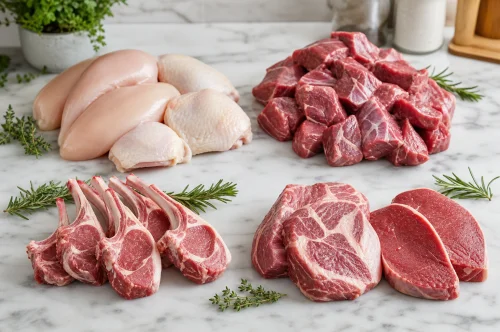
A useful listing tells you the species, cut, bone-in or boneless format, approximate weight, package size, fresh or frozen condition, and any trimming or portioning options. Avoid choosing only by the product photograph. The cut and intended cooking method matter more than appearance.
| Cut | Best use | Why choose it |
|---|---|---|
| Chicken breast | Quick sautés, grilling, meal prep | Lean and fast-cooking; watch the temperature to avoid drying it out. |
| Chicken thighs | Curry, roasting, grilling | More forgiving and flavorful during longer cooking. |
| Goat shoulder or mixed curry cut | Slow curry, stew, pressure cooking | Connective tissue becomes tender with moist, patient cooking. |
| Lamb shoulder | Roasting, braising, kebabs | Rich flavor and good value for slow or medium-slow cooking. |
| Lamb loin or rib chops | Pan searing and grilling | Tender portions suited to quick, high-heat cooking. |
| Beef chuck | Pot roast, stew, curry | Excellent flavor and tenderness after slow cooking. |
| Beef sirloin | Grilling, stir-fry, kebabs | A versatile balance of tenderness and value. |
3. Decide whether fresh or frozen fits your plan
Fresh meat is convenient when you plan to cook it soon. Frozen meat is often the better choice for stocking up, reducing food waste, or ordering less frequently. Proper freezing preserves safety; recommended freezer time limits are mainly about maintaining best quality. Neither option is automatically superior—the right choice depends on delivery timing, package integrity, and how soon you will cook.
If a seller uses the word “fresh” for poultry, remember that USDA labeling rules give that term a specific temperature meaning. The product should also carry proper refrigeration instructions.
4. Check the delivery promise before paying
- Service area: Confirm that the exact California ZIP code is covered.
- Delivery window: Choose a time when someone can receive the box promptly.
- Cold source: Perishable meat should travel cold or frozen with gel packs, dry ice, or another suitable cold source.
- Insulated packaging: Look for an insulated liner or sturdy temperature-protective container.
- Problem policy: Know how quickly you must report a warm, leaking, damaged, or missing item.
5. Inspect the order immediately
Open the package as soon as it arrives. USDA guidance says perishable food should arrive frozen, partly frozen with ice crystals, or at least refrigerator-cold—below 40°F when checked with a food thermometer. Do not taste meat that arrives warm. Photograph the package and temperature, keep the label, contact the seller, and follow local food-safety advice.
Check every seal for leaks, tears, excessive trapped air, or broken vacuum packaging. Move acceptable products directly into a refrigerator at 40°F or below or a freezer at 0°F or below.
6. Compare value by usable meat, not only price per pound
A lower listed price is not always the lower meal cost. Compare bone-in versus boneless yield, trimming, portion size, packaging, delivery fees, and whether the cut suits your recipe. Bone-in goat or lamb can add body and flavor to curry, while boneless portions may save preparation time. Family packs can be economical only if you can portion and freeze them promptly.
10 things to check before ordering meat online
- A named halal authority or a clear explanation of halal supervision.
- The exact cut and species.
- Bone-in or boneless format.
- Package weight and number of portions.
- Fresh, previously frozen, or frozen status.
- Cutting, trimming, and package options.
- Delivery coverage for your ZIP code.
- Insulated packaging and a cold source.
- A clear refund or replacement process.
- A plan to refrigerate or freeze the order immediately.
A simple first-order strategy
Start with a small mixed order rather than filling the freezer. Try one everyday cut, one slow-cooking cut, and one premium cut. Note the packaging, delivery temperature, trim quality, weight, and cooking result. A supplier earns repeat business through consistency, not one attractive photo.
Sources and further reading
- USDA FSIS: Mail Order Food Safety
- USDA FSIS: Meat and Poultry Labeling Terms
- USDA FSIS: Refrigeration and Food Safety
Food-safety guidance can change. Follow package instructions and current USDA/FDA advice, especially for young children, older adults, pregnant people, and anyone with a weakened immune system.