How to Tell If Seafood Is Fresh Before Buying
Use smell, texture, eyes, gills, packaging, ice, and temperature—not color alone—to judge fresh fish, shrimp, scallops, and frozen seafood before buying.
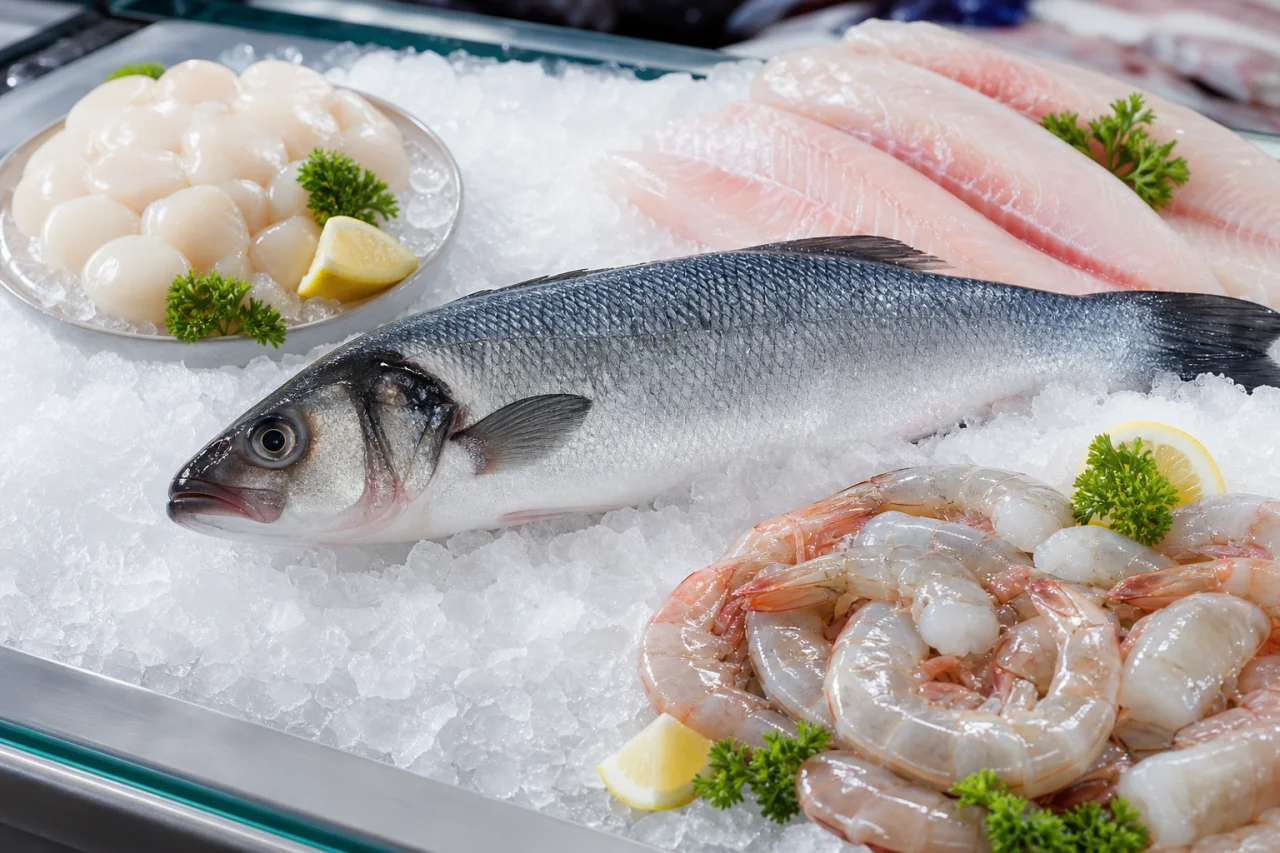
Fresh seafood should smell mild, feel firm, and stay properly chilled. Bright color can be appealing, but the FDA warns that color alone is not a reliable freshness test because diet, environment, and processing can all affect appearance.
Use several clues together. If the smell, texture, temperature, or packaging raises concern, choose another product.
Begin with the seafood counter
Buy fish and shellfish only when they are refrigerated or displayed on a thick bed of fresh ice, preferably inside a covered case. The display should look clean, the ice should surround the product rather than sit far below it, and meltwater should drain away.
For delivery orders, inspect the box immediately. Seafood should arrive frozen, partly frozen with ice crystals, or at least refrigerator-cold. A warm package, broken seal, or strong off-odor is a reason to contact the seller and avoid tasting the product.
Use your nose first
Fresh fish should smell mild and clean—not strongly “fishy,” sour, rancid, or ammonia-like. Shrimp, scallops, crab, and lobster flesh should have little or no odor. If an ammonia smell becomes noticeable during cooking, the FDA advises not eating the seafood.
How to inspect a whole fish
- Eyes: Look for clear, shiny, full eyes rather than cloudy or deeply sunken ones.
- Flesh: It should feel firm and spring back when gently pressed.
- Gills: Fresh whole fish generally have red gills without an unpleasant odor.
- Skin and scales: The surface should look moist and clean, with scales that are reasonably intact for the species.
- Belly: Avoid fish with a torn, swollen, or badly discolored belly.
Previously frozen whole fish may not show every classic fresh-fish feature. Its smell and handling temperature remain important.
How to inspect fillets and steaks
Choose fillets with firm flesh and moist surfaces. The edges should not look dried, browned, darkened, or ragged from dehydration. Avoid excessive liquid pooling in the package or flesh that separates into gaps without pressure.
For fresh tuna, naturally red flesh can be expected, but do not use redness alone as proof of freshness. Read any “previously frozen” statement and judge the product by smell, texture, temperature, and package condition.
Shrimp, scallops, crab, and lobster
- Shrimp: Flesh should be translucent to pearly, firm, and nearly odorless. Avoid sliminess, strong odor, or extensive black spotting not normal for the product.
- Scallops: Look for firm, moist pieces with a pearly appearance and a mild smell. Avoid pieces sitting in excessive cloudy liquid.
- Crab and lobster: Buy live shellfish only from a source that maintains proper conditions. Live crabs and lobsters should show movement.
- Clams, mussels, and oysters: Shells should be closed or should close when tapped. Discard cracked shells. Check required harvest or dealer identification.
What to check on frozen seafood
Frozen seafood can be an excellent choice. The package should be sealed and solidly frozen without tears, crushing, or major frost buildup. Avoid packages with large ice crystals or heavy frost, which may indicate long storage or thawing and refreezing. Do not buy packages stored above the freezer case’s frost line.
Previously frozen does not mean poor quality
Freezing soon after harvest can preserve quality and make seafood available far from the coast. “Fresh” and “previously frozen” describe handling history, not a guaranteed ranking. A properly frozen fillet can be a better purchase than a poorly chilled “fresh” one.
After you buy: protect the cold chain
- Take seafood home promptly, using an insulated bag for a long trip.
- Keep the refrigerator at 40°F or below.
- If you will use seafood within 2 days, refrigerate it in a clean container; otherwise freeze it.
- Store raw seafood below ready-to-eat food to prevent drips and cross-contamination.
- Never leave perishable seafood out for more than 2 hours, or more than 1 hour when the air temperature is above 90°F.
Cook seafood safely
Most seafood should reach 145°F. Fish should become opaque and separate easily with a fork; shrimp, scallops, crab, and lobster become firm and pearly; clams, mussels, and oysters should open during cooking, and unopened shells should be discarded. A thermometer provides more confidence than appearance alone.
The 30-second seafood checklist
- Is it properly refrigerated or deeply surrounded by clean ice?
- Does it smell mild rather than fishy, sour, rancid, or ammonia-like?
- Is the flesh firm and moist, not mushy or drying at the edges?
- Are whole-fish eyes clear and shiny?
- Is the package sealed and free from suspicious frost or leaking liquid?
- Can you chill it promptly after purchase or delivery?