Mutton Seekh Kebab Recipe: Skillet or Grill
Make mutton seekh kebabs with ground goat, herbs and warm spices. Learn how to shape firm kebabs and cook them in a skillet or on a grill.
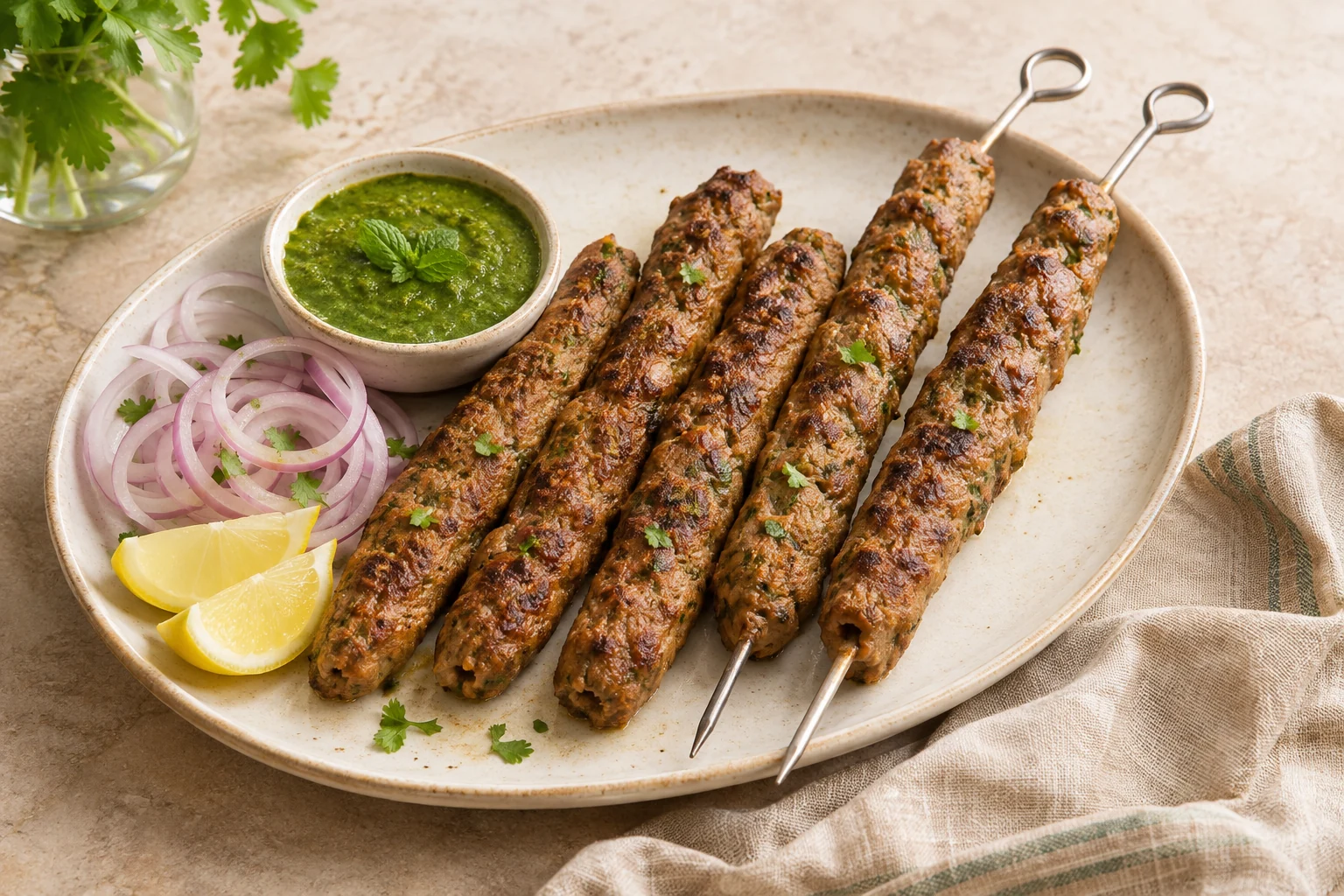
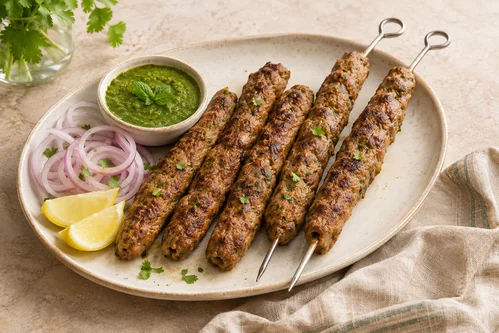
Serving suggestion. AI-generated image.
Seekh kebabs turn a simple pack of mince into a meal that feels made for sharing. The best starting point is a mixture that holds its shape: finely chopped herbs, onion squeezed free of excess liquid, and meat kept cold until cooking. A hot skillet gives you browned edges even when an outdoor grill is not an option.
This mutton seekh kebab recipe uses ground goat and makes eight small kebabs, enough for four servings alongside bread and salad. Check Mutton Keema for the available grind and pack options. In this recipe, mutton refers to goat; plain ground lamb is an alternative, with a different flavour and fat content.
Choose your mince
Choose plain mince with some natural fat rather than assuming every pack will behave the same way. Very lean mince can be less forgiving on a grill. The small amount of oil in the mixture helps, but moisture control matters too. Do not add wet chutney, large onion pieces or a splash of water to the raw kebab mix. A fine-to-medium grind is easier to shape than large, loose pieces.
Make it at home
Mutton Seekh Kebabs
Total time includes 30 minutes of refrigerator chilling. Use the skillet method below, or the grill variation after it.
Ingredients
- 1 lb (450 g) plain ground goat (mutton keema)
- 1 small onion (about 100 g), grated and squeezed very dry
- 2 teaspoons finely grated ginger
- 3 garlic cloves, finely grated
- 3 tablespoons finely chopped cilantro
- 1 tablespoon finely chopped mint
- 1 small green chili, finely minced (optional)
- 1 teaspoon ground cumin
- 1 teaspoon ground coriander
- 1/2 teaspoon garam masala
- 1/4 teaspoon ground black pepper
- 3/4 teaspoon fine salt
- 2 tablespoons fine plain breadcrumbs, plus 1 tablespoon only if needed
- 1 tablespoon neutral oil for the mixture, plus 1 tablespoon for the pan
- Mint chutney, lemon wedges and sliced onion, for serving (optional)
Step-by-step method
- Grate the onion and squeeze it firmly in a clean cloth or fine sieve. Put the drained onion into a bowl with the chilled mince, ginger, garlic, herbs, optional chili, spices, salt, 2 tablespoons breadcrumbs and 1 tablespoon oil.
- Mix by hand for 1-2 minutes until the mixture feels tacky and holds together. If it is visibly wet, work in the remaining tablespoon of breadcrumbs. Cover and refrigerate for 30 minutes; keep the meat cold while you prepare the serving dishes.
- Divide into eight equal portions. With lightly oiled hands, form each into an even cylinder about 4 inches (10 cm) long and 3/4 inch (2 cm) thick. For the skillet, leave them off skewers. Avoid thin ends that can burn before the centre cooks.
- Heat a heavy skillet over medium heat with the remaining tablespoon of oil. Add the kebabs in one layer, working in batches if needed. Cook for about 12-15 minutes in total, turning gently every few minutes after the first side has set.
- Check several kebabs with an instant-read thermometer inserted from the side into the thickest centre. Ground goat must reach 160°F (71°C). Reduce the heat if the outside browns too quickly, and continue cooking until the centres are safe.
- Transfer to a clean platter. Serve hot with optional chutney, onion and lemon, plus flatbread or rice. Use clean tongs and a clean plate rather than the utensils or tray that held the raw mince.
Temperature guidance: FoodSafety.gov safe minimum temperatures. Use a thermometer; colour alone is not a safety check.
How to grill seekh kebabs
Use flat metal skewers, which hold the mixture more securely than round ones. Press each portion firmly around a skewer in an even layer, seal the ends and chill until ready. Preheat a clean grill to medium-high and oil the grate carefully. Put the kebabs over the heat and let the first side set before turning.
Turn with tongs at the skewer, supporting the meat if necessary. Expect roughly 10-14 minutes, but thickness and grill heat vary. Use the same centre-temperature check as the skillet method. Move the kebabs to a cooler part of the grill if they are browning before the middle is done. Skewers become very hot; handle them with heatproof gloves.
Why seekh kebabs fall apart
- Too much onion liquid: squeeze the grated onion thoroughly before mixing. Extra breadcrumbs cannot fully rescue a very watery mixture.
- Warm mixture: refrigerate before shaping, and return waiting portions to the fridge while another batch cooks.
- Not enough mixing: a brief, firm mix helps the mince become tacky enough to hold its shape. Stop once it binds; do not process it into a smooth paste.
- Turning too early: give the first side time to set. Slide a thin spatula underneath a skillet kebab rather than pulling it loose with tongs.
Build a kebab meal
Serve two kebabs per person in warm flatbread with shredded lettuce, cucumber and a little chutney. For a platter, add rice and a chopped tomato salad. Keep sauces separate when packing lunches so the bread stays pleasant to eat.
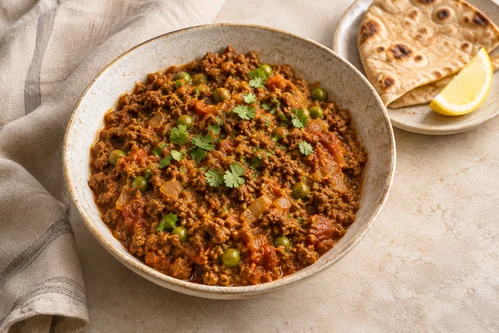
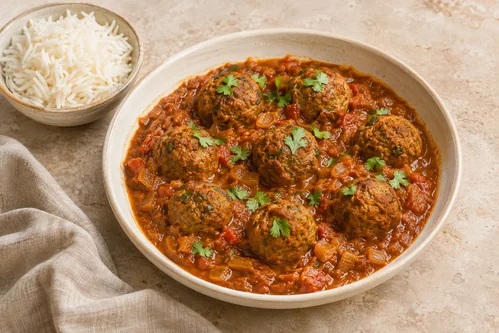
Breadcrumbs usually contain wheat; check the label and use a suitable gluten-free alternative if required. The base mixture needs no egg. If you prefer a spoonable dinner, try keema curry with peas or mutton kofta curry with the same type of mince.
Storage and reheating
Refrigerate in shallow containers within 2 hours (1 hour above 90°F). Keep at 40°F or below; use cooked leftovers within 3-4 days. Freeze portions you will not use in that time. Reheat to 165°F (74°C).
See FoodSafety.gov handling guidance and its cold storage chart. For more planning advice, read our fresh meat storage guide.
Frequently asked questions
Do I need skewers to make seekh kebabs?
No. Shape even cylinders and cook them directly in a skillet. Skewers are useful for the grill but are not necessary for the stovetop method.
Can I prepare the mixture ahead?
Yes. Keep it covered in the refrigerator and cook within the raw meat storage window, counting from purchase or thawing rather than from when you mixed the spices.
Why are my kebabs dry?
Very lean meat, thin ends and extended cooking can all dry them out. Keep the thickness even, use moderate heat and stop when the centre has reached the safe temperature.