Mutton Keema Curry Recipe with Peas
Make mutton keema curry with ground goat, tomatoes and peas. Follow measured ingredients, clear stovetop steps and tips for a rich, balanced masala.
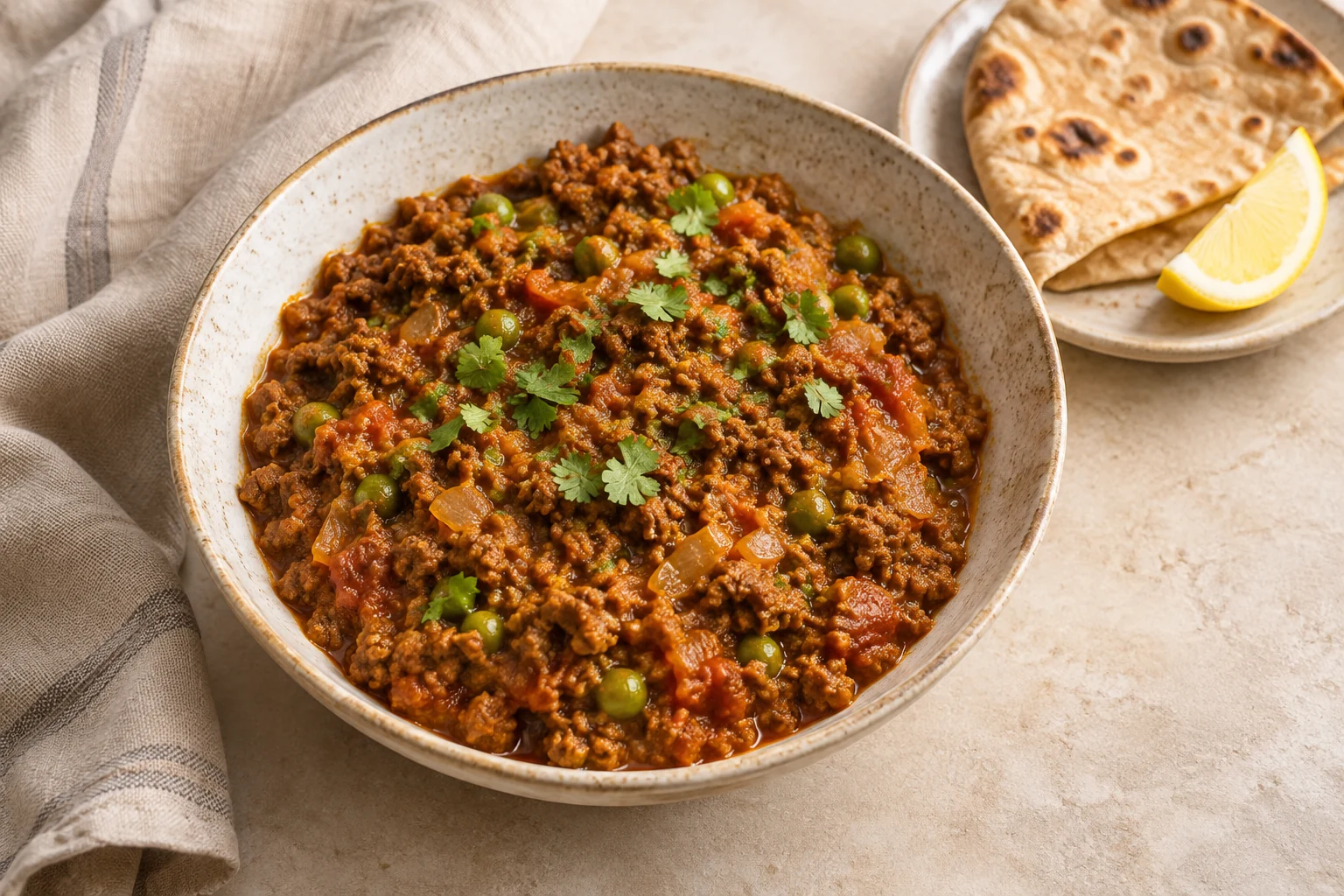
Serving suggestion. AI-generated image.
A good keema curry is all about the small details: onions softened until golden, tomatoes cooked into a concentrated masala, and mince broken into tender, separate pieces. Green peas add a little sweetness, while a final pinch of garam masala brings the spices back into focus. Serve it with warm roti for scooping or spoon it over plain basmati rice.
This South Asian-style mutton keema recipe uses ground goat. The word mutton can describe different meats in different markets, so check your package rather than assuming it means lamb. Start with Farmers Fresh Mutton Keema and confirm the preparation and available pack size on the product page. The recipe below makes four moderate servings from one pound of mince.
Choose your mince
Use plain, unseasoned mince so you can control the salt and spices. A medium grind works well: very fine mince can turn pasty if stirred aggressively, while very coarse mince needs more time to become tender. Keep the meat chilled until the pan is ready. If doubling the recipe, use a wider pan or brown the mince in batches rather than steaming it in a crowded saucepan.
Make it at home
Mutton Keema Curry with Peas
Timing is a guide; mince texture, pan size and heat can change how long the curry needs.
Ingredients
- 1 lb (450 g) plain ground goat (mutton keema)
- 2 tablespoons neutral cooking oil
- 1 medium onion (about 150 g), finely chopped
- 2 teaspoons finely grated ginger
- 3 garlic cloves, finely grated
- 1 cup (240 g) crushed tomatoes
- 1 teaspoon ground cumin
- 1 1/2 teaspoons ground coriander
- 1/4 teaspoon ground turmeric
- 1/2 teaspoon mild chili powder, or less to taste
- 3/4 teaspoon fine salt, then adjust after cooking
- 1/2 cup (120 ml) water, plus a little more if needed
- 3/4 cup (100 g) frozen green peas
- 1/2 teaspoon garam masala
- 2 tablespoons chopped cilantro and 1 teaspoon lemon juice, to finish
- Cooked basmati rice or roti, for serving (optional)
Step-by-step method
- Heat the oil in a wide, heavy pan over medium heat. Add the onion and cook for 8-10 minutes, stirring, until soft and lightly golden. Lower the heat if the edges darken before the centre softens.
- Add ginger and garlic and stir for 1 minute. Add cumin, coriander, turmeric and chili powder; stir for about 20 seconds. Immediately add the tomatoes and salt. Cook for 6-8 minutes until thick, stirring so the base does not catch.
- Add the cold mince. Break it apart with a wooden spoon and cook for 5-6 minutes, stirring and turning until evenly crumbled. Keep some texture rather than pressing it into a paste.
- Stir in the water, bring to a gentle simmer, cover and cook for about 8 minutes. Stir once or twice. Add a splash of water if the pan begins to dry before the mince is tender.
- Add the peas and cook uncovered for another 4-5 minutes, or until tender and the sauce coats the mince. Check the meat mixture with a food thermometer in several places; ground goat must reach 160°F (71°C). Continue cooking if needed.
- Stir in garam masala, cilantro and lemon juice. Taste only once the meat is safely cooked, then adjust salt or chili. Serve hot with rice or roti, keeping extra lemon on the table.
Temperature guidance: FoodSafety.gov safe minimum temperatures. Use a thermometer; colour alone is not a safety check.
Build flavour without making the curry heavy
Let the tomatoes lose their raw, watery appearance before adding the meat. This concentrates the base without needing cream or a long list of spices. If the masala sticks, loosen it with a tablespoon of water rather than adding oil repeatedly.
For a milder family meal, reduce the chili powder first and pass sliced chilies separately. Garam masala blends differ considerably; begin with the measured amount and add a small pinch at the end if yours is gentle. Lemon should brighten the curry, not make it sharply sour.
Common keema curry problems, solved
- Watery sauce: simmer uncovered in a wide pan, stirring often, until excess liquid evaporates. Do this before adding more seasoning.
- Large clumps: break up the mince as it first cooks. Once the pieces firm up, they are harder to separate evenly.
- Dry mince: keep the simmer gentle and add a little hot water. Do not keep frying after the curry has reached the right texture and safe temperature.
- Bitter spices: ground spices can scorch in seconds. Have the tomatoes ready before adding them to the hot pan.
Serving ideas and easy changes
Pair the curry with roti, cucumber salad and plain yogurt, or build a rice bowl with a spoonful of keema and a generous portion of vegetables. Leave the peas out if you prefer a plain keema, replacing them with a small splash of water only if the pan needs it.
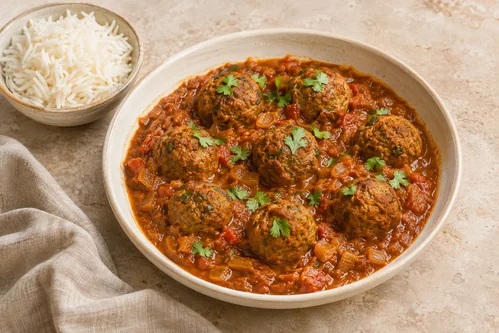
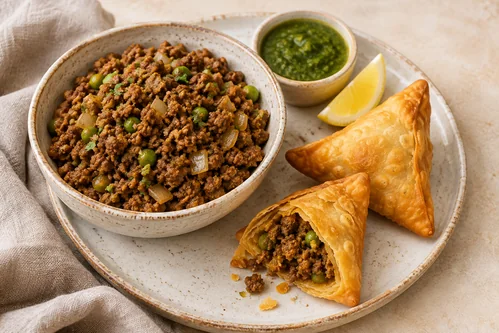
For another mince dinner, try mutton kofta curry. Planning finger food instead? Use the separate keema samosa filling recipe; its drier mixture is better suited to pastry than this saucy curry.
Storage and reheating
Refrigerate in shallow containers within 2 hours (1 hour above 90°F). Keep at 40°F or below; use cooked leftovers within 3-4 days. Freeze portions you will not use in that time. Reheat to 165°F (74°C).
See FoodSafety.gov handling guidance and its cold storage chart. For more planning advice, read our fresh meat storage guide.
Frequently asked questions
Is keema curry the same as keema matar?
Keema means minced meat; matar means peas. This version includes peas, so it can also be described as keema matar. A keema curry without peas is still keema curry.
Can I use ground lamb instead of goat?
Yes, plain ground lamb can replace the goat by weight. Its fat level and flavour may differ, so spoon off excess rendered fat if needed and adjust seasoning after cooking.
Can I make a larger batch?
Yes. Double the ingredients and use a wide pan, allowing extra time for the onions and tomato base. Check the temperature in several places rather than doubling the cooking time automatically.